

The MAGA Child Savings Account: What Every Parent Needs to Know
If you’re a current or soon-to-be parent, there’s a new financial tool you should be aware of: the MAGA Account (Money Account for Growth and Advancement). Introduced as part of current President Donald Trump’s “One Big Beautiful Bill,” this program aims to jump-start financial savings for the next generation.
Here’s a full breakdown of what MAGA Accounts are, how they work, and what it means for your family.
What is a MAGA Account?
The MAGA Account is a federally backed savings program designed to help children build long-term financial security. Referred to as “Trump Accounts,” these are government-seeded investment accounts for eligible newborns and young children.

Key Features
- Initial $1,000 Government Contribution: Each eligible child receives $1,000 deposited by the federal government.
- Annual Contribution Limit: Up to $5,000 per year in after-tax contributions can be made by parents, guardians, relatives, or even employers.
- Investment Strategy: Funds are invested in a U.S. equity index fund managed by private financial firms with Treasury oversight.
- Access Timeline:
- 50% of the funds can be withdrawn at age 18.
- Full access at age 25.
- All funds must be withdrawn by age 30.
- Qualified Uses: Education, first-time home purchase, or starting a business (subject to favorable tax treatment).
Who is Eligible?
- Children born between January 1, 2025, and December 31, 2028.
- Some children under 8 years old born before 2025 may also qualify, depending on final implementation rules.
Common Questions & Answers
Q: Can I open a MAGA account for my child myself? A: MAGA accounts will be automatically opened for eligible children. Parents or legal guardians can then manage the account and contribute to it.
Q: What happens if the account is not used by age 30? A: Funds must be withdrawn by age 30. If not, unused money may revert to the government or be penalized depending on regulations.
Q: Are earnings tax-free? A: Earnings grow tax-deferred. Withdrawals for qualified uses are taxed at the long-term capital gains rate. Non-qualified uses may incur a 10% penalty and regular income tax.
Q: How does this affect college financial aid? A: Since the account is in the child’s name, it may be counted as a student asset, which can reduce eligibility for need-based financial aid.
Q: How is this different from a 529 plan? A: Unlike 529 plans, MAGA accounts can be used for more than just education, but they don’t offer tax-free withdrawals. They are also not state-managed.
Pros and Cons for Parents to Consider
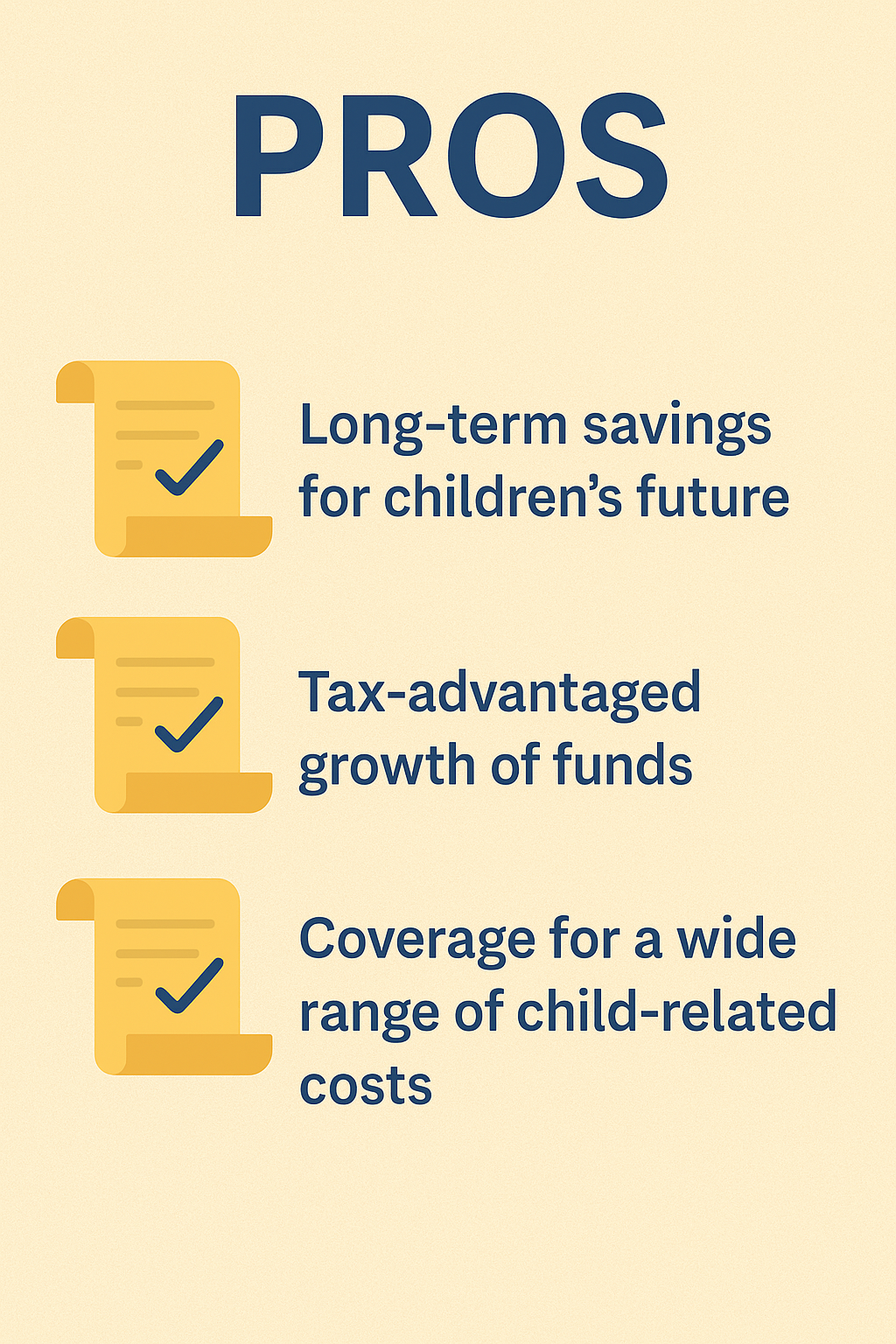
Pros:
- Free $1,000 start for your child.
- Encourages early investment and financial literacy.
- Flexibility in how funds are used.
Cons:
- Earnings are taxed upon withdrawal.
- Potential to reduce financial aid.
- Political branding may influence future changes to the program.
How Much Could Your Child Have?
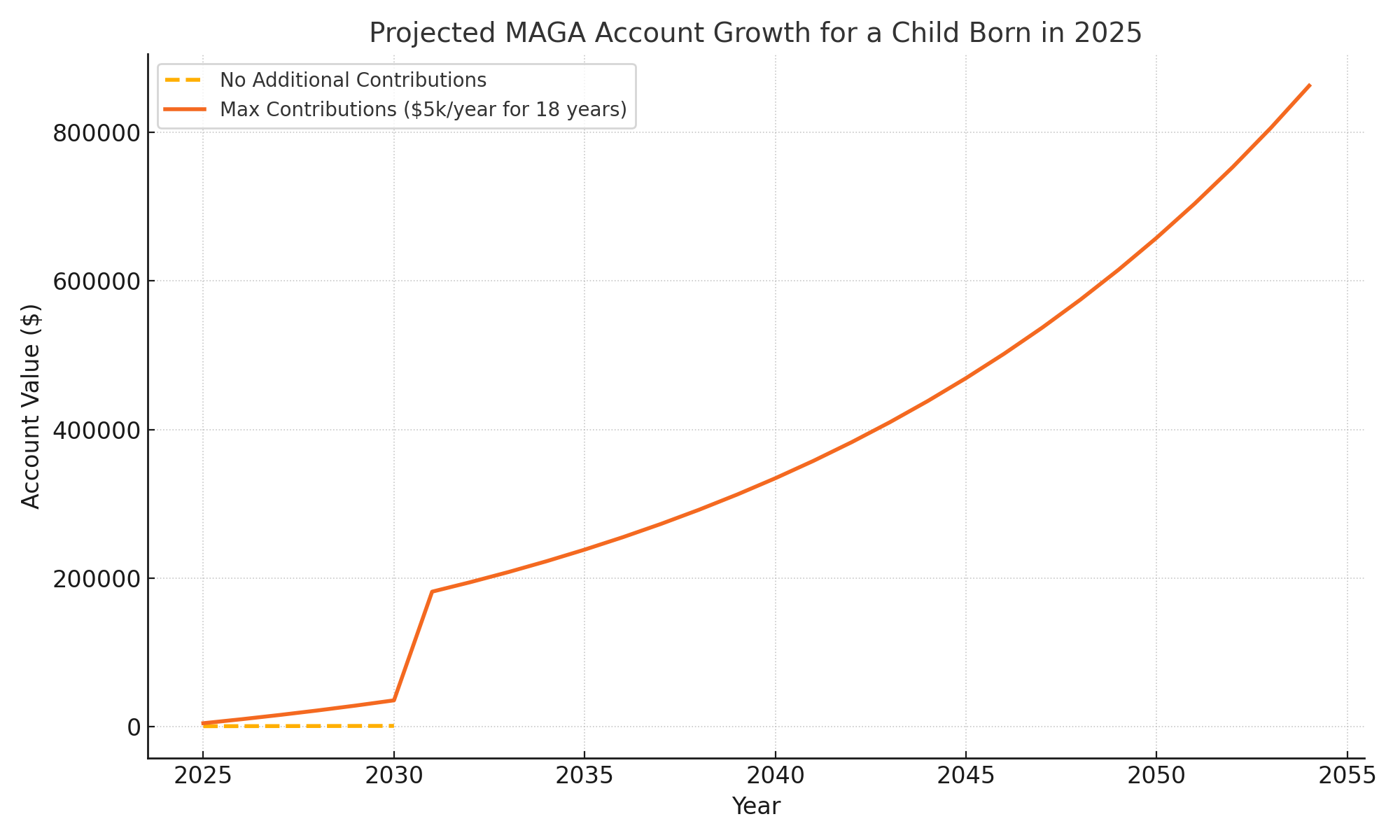
Let’s explore two financial projections for a child born in January 2025, assuming an average annual return of 7% from a U.S. equity index fund:
Scenario 1: No Additional Contributions
- By Age 18:
The initial $1,000 government deposit would grow to approximately $3,400. - By Age 30:
That same $1,000 left untouched could grow to around $7,600.
Scenario 2: Maxed Out Contributions ($5,000/year)
- Over 18 years, parents could contribute up to $90,000 total.
- By Age 18:
The account could be worth approximately $170,000, assuming consistent contributions and market performance. - By Age 30 (no additional contributions after 18, just compounding):
The account could grow to around $336,000.
Note: These figures are estimates. Actual results depend on market performance, investment fees, and contribution timing.
How to Track and Manage a MAGA Account
- Access and Management: MAGA accounts will likely be accessible via a secure government portal or financial partner platform. Expect features like an online dashboard and potentially a mobile app to monitor contributions, growth, and usage.
- Family Contributions: Contributions can come from parents, grandparents, and even employers. These might be done via gifting links or account routing numbers.
- Account Statements: Parents should receive periodic statements—quarterly or annually—detailing account performance and contributions.
Tax Planning Tips for MAGA Accounts
- Tax Treatment: Growth is tax-deferred. Qualified withdrawals (education, home, business) are taxed at favorable long-term capital gains rates. Non-qualified withdrawals incur income tax and a 10% penalty.
- Gifting Strategy: Contributors can use the IRS annual gift tax exclusion (currently $18,000 per person in 2024) to avoid triggering gift taxes.
- Compared to Other Accounts: MAGA accounts offer broader use than 529 plans but less favorable tax treatment. They don’t require earned income like a Roth IRA for kids.
Strategic Uses for MAGA Funds
- For College: Use alongside a 529 to cover expenses that fall outside tuition and textbooks (e.g., housing, travel, business projects).
- For Homeownership: Apply MAGA funds to a first-time home down payment in early adulthood.
- For Entrepreneurship: Start a small business or side hustle—especially valuable for teens and young adults not pursuing traditional college paths.
Talking to Your Child About Their MAGA Account
- Ages 5–10: Introduce the idea of “your special growing savings account.”
- Ages 11–15: Explain investing and compound growth in simple terms.
- Ages 16–18: Include them in financial planning, review statements, and discuss future plans for the money.
What to Watch Out For
- Political Shifts: Since this is a Trump-branded initiative, future administrations could modify or terminate the program.
- Impact on College Aid: Because the account is in the child’s name, it could reduce eligibility for need-based college aid.
- Single-Bucket Risk: Avoid relying solely on one savings tool. Diversify with 529s, Roth IRAs (if the child has income), and traditional savings.
MAGA Account Quick Facts – At a Glance
| Feature | Details |
|---|---|
| Initial Government Contribution | $1,000 |
| Annual Contribution Limit | $5,000 (after-tax) |
| Access Timeline | 50% at age 18, full at 25, must be used by 30 |
| Qualified Uses | Education, home purchase, or business startup |
| Tax Treatment | Tax-deferred growth; LTCG on qualified use |
| Financial Aid Impact | Considered a student-owned asset |
| Longevity Risk | May be affected by future political changes |
Final Thoughts
Whether you’re expecting a child soon or raising young ones already, the MAGA Account program could offer a unique opportunity to set up long-term financial security. While it’s not without limitations, the government-seeded contribution and flexibility make it worth considering alongside more traditional savings options like 529 plans.
As with any financial decision, consult with a financial advisor to see how this fits into your broader savings goals.
Stay informed, plan smart, and give your child a head start!
 Its a Jersey Thing Blog